
For decades, Mac’s Old House was more than just a restaurant. It was a gathering place where families celebrated milestones, friends shared meals, and generations of customers created lasting memories. Known for its welcoming atmosphere, family-style dining, and classic Italian-American dishes, the restaurant became a beloved institution in Antioch, California.
When news of the Mac’s Old House closure emerged, many longtime patrons were shocked. The restaurant had survived economic downturns, changing dining trends, and even the challenges brought by the COVID-19 pandemic. Its closing marked the end of a significant chapter in local dining history while also raising questions about the future of the iconic establishment.
Although the closure saddened many loyal customers, the story of Mac’s Old House did not end when its doors temporarily closed. Instead, it entered a new phase that combines preservation, renovation, and renewal.
A Historic Landmark with Deep Community Roots
The history of Mac’s Old House stretches back nearly a century. The building itself was originally constructed around 1925 by Floyd “Mac” McKinney and his father. What began as a family home eventually evolved into a local landmark when part of the property was converted into a bar in 1956. Over time, it became a full-service restaurant that attracted diners from throughout Contra Costa County.
Unlike many modern restaurants that frequently change concepts or menus, Mac’s Old House built its reputation on consistency. Guests knew exactly what to expect: generous portions, warm hospitality, and a traditional family-style dining experience.
The restaurant’s signature offerings, including prime rib, minestrone, fresh bread, pasta, and classic Italian-American favorites, became staples for countless families. Many customers visited regularly for years, creating traditions that were passed down from one generation to the next.
The Legacy of Gary Noe and Rick Cook
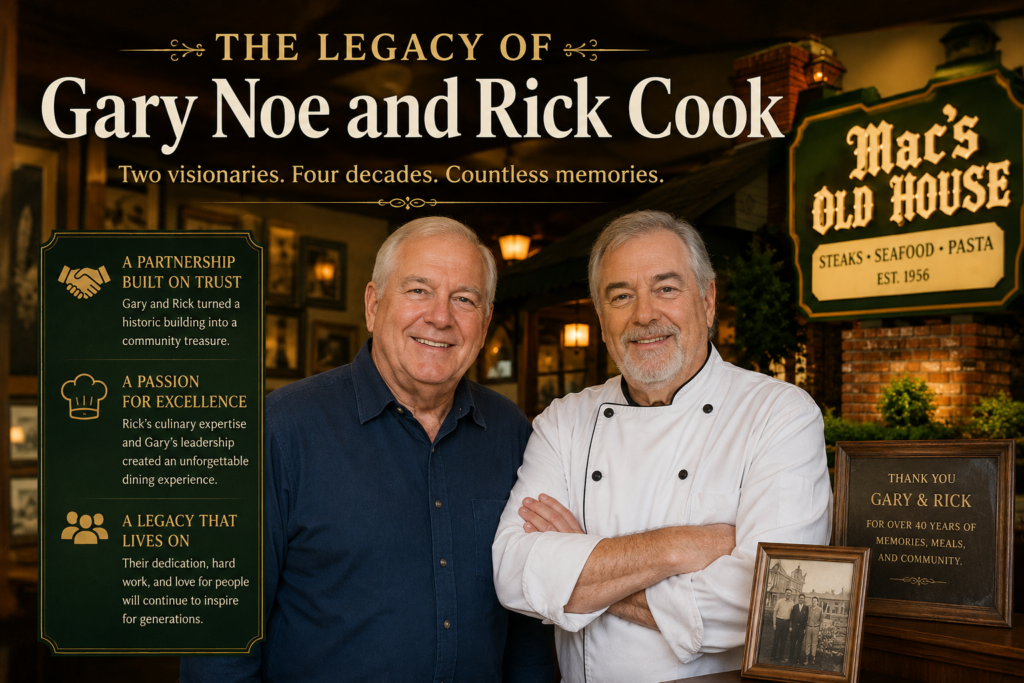
A major part of the restaurant’s success can be attributed to owner Gary Noe and head chef Rick Cook. In 1983, Gary Noe purchased the property and began shaping Mac’s Old House into the restaurant that residents came to love. Rick Cook joined the operation and helped establish many of the recipes and traditions that defined the dining experience.
Together, the pair operated the restaurant for more than four decades. Their commitment to quality, affordability, and community connection helped Mac’s Old House stand out in an increasingly competitive restaurant industry.
During their tenure, the restaurant served millions of meals and became one of the most recognizable dining destinations in the region. Even as restaurant trends shifted toward fast-casual concepts and upscale dining experiences, Mac’s remained committed to its traditional roots.
Why Did Mac’s Old House Close?
The closure of Mac’s Old House was not the result of a single event. Instead, it reflected a combination of factors that often affect long-running family businesses.
According to information released by the restaurant, Gary Noe and Rick Cook decided to retire after 42 years of operating the establishment. Their retirement marked a natural turning point for the business. After dedicating decades of their lives to the restaurant, they chose to step away and close operations in June 2025.
Like many restaurants, Mac’s Old House had also faced significant challenges over the years. Economic recessions, changing consumer habits, rising operating costs, and the impact of the COVID-19 pandemic created ongoing pressures for the business. Despite overcoming many obstacles, retirement ultimately became the deciding factor behind the closure.
The restaurant officially served its final customers on June 22, 2025, ending an era that had lasted more than four decades under Noe’s ownership.
Community Reaction to the Closure
The announcement generated an emotional response throughout the community. Many customers shared memories of birthdays, anniversaries, graduations, and family gatherings that had taken place within the restaurant’s historic walls.
For some residents, Mac’s Old House represented a connection to childhood memories and family traditions. Others viewed it as one of the last remaining examples of old-school dining culture in the Bay Area.
Online discussions reflected both sadness and appreciation. Longtime customers praised the restaurant’s value, generous portions, and unique atmosphere. Many expressed gratitude for the decades of service provided by the owners and staff.
The closure highlighted how deeply local restaurants can become woven into the fabric of a community. Unlike chain establishments, independent restaurants often create emotional connections that extend far beyond food.
What Made Mac’s Old House Special?
Several factors contributed to the restaurant’s enduring popularity.
Family-Style Dining
One of the defining characteristics of Mac’s Old House was its family-style approach. Meals often included soup, salad, bread, pasta, and vegetables alongside the main entrée. This created a communal dining experience that encouraged conversation and connection.
Affordability
Customers frequently remarked on the restaurant’s ability to provide substantial meals at reasonable prices. Even as food costs increased over the years, Mac’s maintained a reputation for offering exceptional value.
Historic Atmosphere
The building itself played a major role in the restaurant’s appeal. Its long history, vintage architecture, and nostalgic charm created an environment unlike most contemporary dining establishments.
Consistency
Many successful restaurants constantly reinvent themselves, but Mac’s succeeded by preserving traditions. Customers knew that their favorite dishes would remain available and prepared according to familiar recipes.
The Future of the Property
While the closure initially appeared permanent, developments after June 2025 brought encouraging news for fans of the restaurant.
The property was purchased by new owners Joe Martinez and Ron Harrison, who announced plans to preserve the legacy of Mac’s Old House while making necessary improvements to the aging building. Rather than replacing the restaurant with a completely different concept, the new ownership team committed to maintaining much of what made Mac’s special.
This announcement was welcomed by many former customers who feared the property might be demolished or converted into an unrelated business.
Renovation and Modernization Plans
According to information released by the new ownership group, the building requires substantial upgrades to meet modern standards and building codes. Planned improvements include structural renovations, updated facilities, expanded dining space, improved parking, and a modernized kitchen.
These changes aim to preserve the restaurant’s historic character while ensuring it can continue operating successfully in the future.
The renovation project represents a significant investment in both the property and the surrounding community. By restoring and modernizing the building, the new owners hope to extend the life of one of Antioch’s most recognizable landmarks.
Preserving the Restaurant’s Legacy
One of the most reassuring aspects of the transition is the commitment to preserving the restaurant’s traditions.
Reports indicate that former head chef Rick Cook has offered support during the transition process and is helping pass along many of the restaurant’s classic recipes. This collaboration increases the likelihood that familiar menu items and flavors will remain part of the dining experience when the restaurant reopens.
For longtime customers, maintaining these traditions is essential. While renovations and updates may improve the facility, the restaurant’s identity ultimately depends on preserving the food, atmosphere, and hospitality that made it successful in the first place.
Planned Reopening
The new ownership group has expressed its intention to reopen Mac’s Old House in 2026 following the completion of renovation work. Their goal is to honor the restaurant’s history while creating a stronger foundation for future growth.
This planned reopening transforms the closure story from one of finality into one of renewal. Rather than disappearing permanently, Mac’s Old House appears poised to begin a new chapter while maintaining its connection to the community.
Lessons from the Closure
The story of Mac’s Old House reflects broader trends affecting independent restaurants across the United States.
Many family-owned establishments face challenges related to succession planning, rising costs, aging infrastructure, and changing consumer expectations. Even successful businesses must eventually confront questions about ownership transitions and long-term sustainability.
At the same time, the community response demonstrates the enduring value of local institutions. Restaurants that prioritize relationships, consistency, and authenticity often develop customer loyalty that extends across generations.
Mac’s Old House serves as an example of how a restaurant can become more than a place to eat. It can become a symbol of community identity, tradition, and shared experiences.
Conclusion
The closure of Mac’s Old House in June 2025 marked the end of an extraordinary era in Antioch’s dining history. After more than four decades under the leadership of Gary Noe and Rick Cook, the beloved restaurant closed its doors as its longtime operators entered retirement.
Yet the story does not end there. New ownership, ambitious renovation plans, and a commitment to preserving the restaurant’s legacy have created optimism about the future. Rather than fading into history, Mac’s Old House appears ready for a revival that balances modernization with tradition.
For longtime customers, the closure was undoubtedly emotional. However, the planned reopening offers hope that future generations will have the opportunity to create their own memories at one of Antioch’s most cherished dining landmarks. The next chapter of Mac’s Old House may look different, but its legacy continues to endure.